



Safety as a Way of Life: How Can Principles Become Everyday Practice?
Safety is not achieved simply by establishing regulations, displaying instructions, or providing protective equipment. It begins when protecting people becomes a natural part of the way decisions are made, tasks are planned, and work is carried out. A truly safe organization is one where people view safety as a shared responsibility and a daily behavior, not as a temporary set of instructions remembered only during inspections or after an incident occurs.
Building this culture requires a genuine shift from formal compliance to real conviction. Employees should think about risks before starting a task, stop when they notice an unsafe condition, speak openly about mistakes and concerns without fear, and take part in developing solutions that protect both themselves and their colleagues.
What Is Safety Culture?
Safety culture is the set of values, beliefs, and behaviors that shape how an organization and its people deal with risk. It appears first in everyday decisions and actions before it appears in written policies.
When an employee refuses to carry out a task without the required protection, reports a hazard before it becomes an incident, or reviews task steps with the team before work begins, these are all signs of a genuine safety mindset.
Responsibility is not limited to the occupational health and safety department. It extends to senior management, supervisors, employees, contractors, and visitors. Everyone in the workplace has a role in identifying hazards and reducing risk.
Why Are Rules and Procedures Not Enough?
Rules and procedures provide an essential foundation for organizing work and defining responsibilities, but they do not guarantee safe behavior on their own. An organization may have comprehensive manuals and procedures while unsafe practices continue because of time pressure, weak supervision, limited practical training, or the belief that production is more important than safety.
A true safety culture becomes visible when people follow the correct procedure even when no one is directly supervising them. At that point, safety moves from being an imposed obligation to becoming a professional and ethical conviction that influences every decision.
Transformation Starts with Leadership
Leadership plays a fundamental role in shaping behavior across an organization. If management speaks about safety but ignores risks whenever they conflict with deadlines or costs, employees will quickly understand that safety is not a genuine priority.
By contrast, when unsafe work is stopped, risks are discussed openly, and appropriate resources are allocated for training and prevention, safety messages become credible actions that employees can trust.
Leadership commitment includes:
- Integrating safety into operational and strategic decisions.
- Providing the resources and tools required to perform work safely.
- Listening to employee concerns and addressing them seriously.
- Recognizing positive behavior instead of focusing only on mistakes.
- Refusing to bypass procedures for the sake of speed or cost reduction.
- Maintaining a visible presence in the workplace and discussing challenges directly with teams.
How Can Safety Principles Become Daily Practice?
1. Start Every Task by Understanding the Risks
Before any task begins, the team should understand the potential hazards, required controls, and individual responsibilities. Risk assessment should not be treated as a document completed only for administrative purposes, but as a practical discussion linked to the actual task and site conditions.
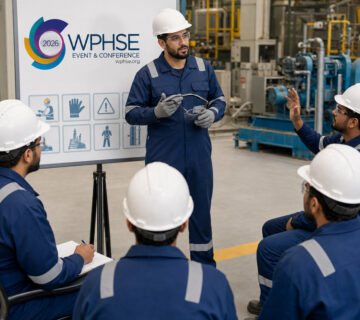
The workday can begin with a short briefing covering planned activities, changes in site conditions, equipment to be used, and hazards requiring particular attention.
2. Simplify Communication
Complex or lengthy messages do not always create the desired impact. Employees need clear, direct instructions that match the nature of their work, their level of experience, and the language they understand.
Communication can be strengthened through toolbox talks, visual signage, short training videos, and real case studies, while allowing employees to ask questions and discuss issues rather than simply receiving instructions.
3. Encourage Hazard and Near-Miss Reporting
A near miss is an event that could have resulted in injury or loss but ended without harm. Learning from these situations gives organizations an opportunity to improve before a real incident occurs.
This requires a reporting system that is simple and fast, together with a clear message that the purpose is to understand the causes of the problem and improve procedures, not to find someone to blame. When employees feel safe reporting concerns, management receives more accurate information about what is really happening in the workplace.
4. Turn Training into a Practical Experience
Providing theoretical information is not enough if participants do not know how to apply it. Effective training should reflect situations that employees may actually face and should include simulations, practical exercises, incident analysis, and emergency response drills.
Training should also be repeated and updated, particularly when new equipment is introduced, work methods are changed, or employees move into different roles.
5. Involve Employees in Developing Solutions
The people who perform tasks every day often have the clearest understanding of real operational challenges. Involving them in risk assessments, procedure development, and the selection of protective equipment helps create more realistic and practical solutions.
This approach also strengthens ownership, because employees become partners in decision-making rather than simply recipients of instructions.
6. Support Health and Well-Being
Safety is not limited to physical hazards. Stress, lack of sleep, work pressure, mental fatigue, and long working hours can all affect concentration, decision-making, and the ability to respond to risk.
Organizations therefore need to manage working and rest hours, encourage early communication when employees feel fatigued, and create a workplace that respects both physical and psychological well-being.
7. Reinforce Positive Behavior
Focusing only on mistakes may encourage employees to hide them. A better approach is to combine corrective action with recognition of positive practices, such as reporting a hazard, stopping unsafe work, or suggesting a practical improvement.
Recognition does not have to be financial. It may be as simple as a word of appreciation, public acknowledgment in front of the team, or sharing a positive example so others can learn from it.
The Role of Technology in Supporting Safety
Modern technologies can strengthen preventive decision-making through digital reporting systems, sensors, environmental monitoring, data analytics, simulation-based training, and the management of permits and inspections.
However, technology does not work independently of people. Its success depends on ease of use, data accuracy, effective training, and management’s ability to turn information into clear actions. The goal is not to collect as much data as possible, but to use it to identify patterns, set priorities, and prevent problems from recurring.
Mistakes That Weaken Safety Culture
An organization may have strong programs but still lose their effectiveness because of repeated practices such as:
- Treating safety as the responsibility of one department only.
- Focusing on indicators only after incidents occur instead of emphasizing prevention.
- Applying procedures strictly to workers while allowing management to ignore them.
- Providing generic training that is not linked to actual job risks.
- Punishing employees who report mistakes or hazards.
- Failing to follow up on concerns raised by employees.
- Measuring success by the number of meetings and reports rather than changes in behavior.
- Allowing production pressure to override safety controls.
How Can We Measure Progress in Safety Culture?
A reduction in incidents is an important indicator, but it does not provide the full picture. Reporting may decrease because employees do not feel confident speaking up or because the reporting process is too complicated.
It is therefore better to monitor a broader set of indicators, including:
- Employee participation in safety meetings and assessments.
- The number of reported observations and hazards.
- The speed at which corrective actions are closed.
- Training quality and its impact on performance.
- Leadership participation in site visits and field discussions.
- Completion rates for inspections and preventive maintenance.
- Employee perceptions of trust, communication, and fairness.
- Recurring issues and common root causes across incidents.
Practical Steps for Building a Sustainable Safety Culture
Organizations can begin the transformation through a clear process:
- Assess the current situation and listen to employees.
- Identify the behaviors and risks that require priority attention.
- Clarify the responsibilities of leaders, supervisors, and employees.
- Simplify procedures and reporting systems.
- Provide practical training linked to real jobs and work locations.
- Follow up on observations and show employees the results of improvements.
- Measure progress and continuously develop programs.
Transformation does not happen through a short campaign or temporary slogan. It is built through consistent decisions and behaviors repeated every day. The more employees feel that their safety is genuinely valued, the greater their participation, trust, and willingness to take responsibility.
Safety Is a Decision Made Every Day
Safety culture is not measured only by what is written in policies. It is revealed when teams face pressure, change, or an unexpected hazard. Those moments show how deeply safety values are embedded within the organization.
When protecting people becomes part of planning, execution, communication, and evaluation, safety moves beyond being a temporary procedure. It becomes a way of life that supports business continuity, protects resources, and creates a workplace built on greater trust, efficiency, and sustainability.