


The Future of Occupational Health and Safety in the Age of Digital Transformation
Work environments are undergoing rapid change as digital technologies become more widespread, operations evolve, and organizations increasingly rely on data and intelligent systems. Occupational health and safety is no longer limited to manual inspections, paper-based reports, and responding to incidents after they occur. It can now benefit from real-time data to identify hazards earlier, analyze their causes, and support preventive decision-making.
Digital transformation creates opportunities for a more proactive approach, enabling organizations to move from dealing with consequences to anticipating problems before they occur. However, this transformation is not achieved simply by purchasing devices or deploying digital platforms. It requires a clear strategy that connects technology with workforce needs, the nature of workplace risks, and organizational objectives.
From Incident Response to Risk Prediction
Traditional safety systems have long relied on recording incidents and violations, analyzing them, and introducing measures to prevent recurrence. While this approach remains important, it often begins only after damage has occurred or a problem has already appeared.
Digital technologies make it possible to continuously monitor a wider range of indicators, including temperature, gas levels, equipment condition, operating hours, and worker movement within hazardous areas. When this data is integrated and analyzed, small changes may reveal an emerging risk before it develops into an incident.
This does not mean that technology can predict every situation, but it can broaden visibility and help safety teams focus on locations and operations that require early intervention.
Sensors and the Internet of Things
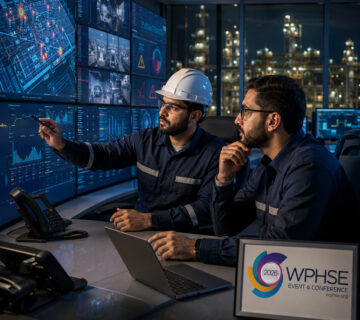
Connected sensors can monitor environmental and operational conditions across workplaces and transmit data to centralized platforms that display the situation in real time.
Potential applications include:
- Measuring temperature, humidity, and noise levels.
- Detecting gases or hazardous substances in confined areas.
- Monitoring equipment vibration and temperature.
- Tracking indoor air quality.
- Issuing alerts when restricted areas are entered.
- Monitoring alarm systems and emergency equipment.
These systems can reduce reliance on periodic inspections, but they require calibration, maintenance, and continuous testing. Inaccurate data may lead to false alerts or create an unrealistic sense of security.
Wearable Devices
Personal protective equipment is evolving from traditional protective tools into connected devices capable of sending and receiving information. Helmets, vests, watches, and portable devices may include sensors that help monitor certain workplace conditions or worker movements.
These devices can support safety by:
- Alerting workers when they approach hazardous areas.
- Detecting falls or unusual periods of inactivity.
- Sending emergency requests and identifying the location of an incident.
- Monitoring exposure to heat or noise.
- Improving response for workers in remote locations.
- Recording selected data related to tasks and surrounding conditions.
However, the use of wearable devices requires clear safeguards to protect employee privacy and define what data is collected, why it is collected, and who is authorized to access it.
Artificial Intelligence and Data Analysis
Organizations generate large volumes of data from incident reports, inspections, maintenance activities, training records, and field observations. This information is often distributed across different systems and files, making it difficult to identify relationships between data points.
Analytics and artificial intelligence tools can help by:
- Identifying recurring patterns in incidents and safety observations.
- Highlighting locations or times associated with higher levels of risk.
- Classifying reports and routing them to the appropriate teams.
- Prioritizing corrective actions according to risk level.
- Analyzing causes of repeated equipment failures.
- Supporting preventive maintenance decisions.
- Monitoring performance indicators and changes over time.
Digital results should remain a decision-support tool rather than a replacement for professional expertise. Algorithms may not always fully understand site conditions, operational circumstances, or human factors that influence a situation. Final decisions therefore require professional review and the involvement of operational teams.
Computer Vision and Monitoring Work Practices
Computer vision systems can analyze images and video footage to identify situations such as failure to use personal protective equipment, entry into restricted areas, obstacles in access routes, or people moving too close to operating machinery.
These systems can be particularly useful at large sites that are difficult to monitor entirely through conventional methods, but they must be implemented responsibly with clear objectives and appropriate privacy safeguards.
Technology should focus on preventing harm and improving the work environment rather than becoming a means of monitoring employees in a way that weakens trust or discourages them from reporting mistakes.
Drones and Robotics
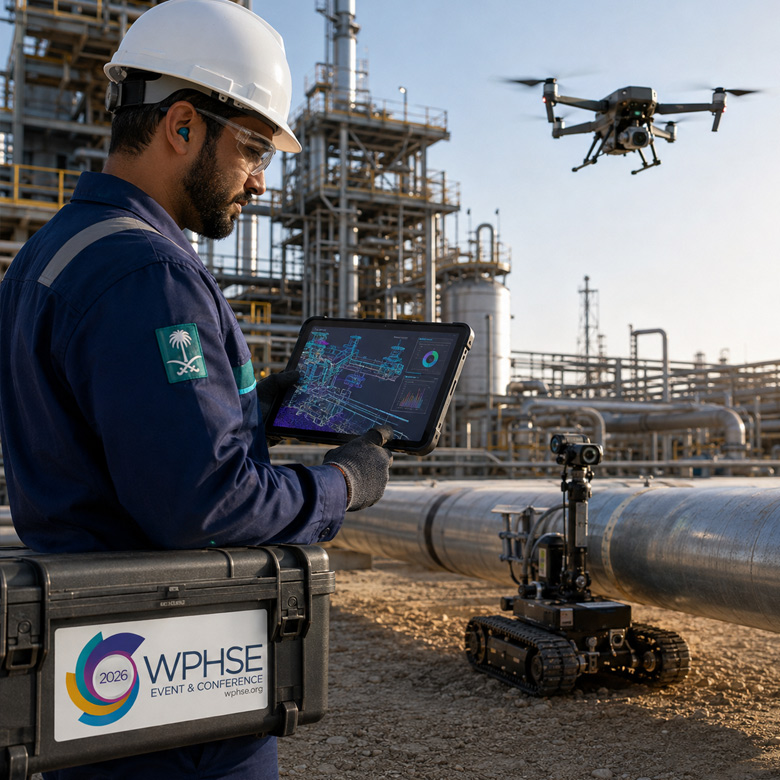
Drones can be used to inspect elevated, extensive, or difficult-to-access areas such as rooftops, industrial facilities, pipelines, and construction sites.
Robots can also support tasks involving high levels of risk, including confined-space inspections, handling hazardous materials, or conducting measurements in environments unsuitable for human entry.
These tools can reduce direct exposure to hazards, but they require specialist operation, emergency procedures, regular maintenance, and proper assessment of any new risks created by their use.
Digital Twins and Simulation
A digital twin is a virtual representation of a facility, process, or system that is updated using actual operational data. It can be used to test scenarios and evaluate the impact of changes before they are implemented in the real environment.
For example, it may be used to simulate employee movement during evacuation, evaluate equipment layouts, study the impact of system failure, or test modifications to production lines.
Simulation gives safety teams the opportunity to identify weaknesses and assess solutions without exposing people or live operations to unnecessary risk.
Virtual and Augmented Reality Training
Virtual reality allows employees to train for situations that may be difficult, dangerous, or expensive to recreate in real life. Participants can experience evacuation scenarios, confined-space work, leak response, equipment operation, and decision-making under pressure.
Augmented reality can provide instructions or equipment information directly to workers while they perform tasks using tablets or specialized smart glasses.
These tools become more valuable when training scenarios reflect the real hazards of the organization and when each session is followed by discussion and evaluation to identify strengths and areas for improvement.
Safety Reporting and Management Platforms
Digital platforms can transform safety processes from separate documents into an integrated system that can be tracked, managed, and analyzed.
Such platforms may include:
- Hazard and near-miss reporting.
- Permit-to-work management.
- Inspection and site-round scheduling.
- Corrective action tracking.
- Training and competency records.
- Maintenance documentation.
- Reports and performance dashboards.
- Alerts and notifications.
The platform should be simple and fast to use. A complicated system may cause workers to delay or avoid reporting. Effective technology should reduce steps, save time, and avoid creating an additional administrative burden.
Digital Transformation and the Role of Employees
The success of technology depends heavily on user acceptance and trust. If employees feel that new systems are being used to monitor or punish them, participation may decline and data quality may suffer.
For this reason, workers should be involved from the planning stage. Organizations should listen to their needs, test solutions with them, and explain both the benefits and limitations of the technology. Users also need training that helps them understand the system, use it correctly, and report any problems.
The most effective technology is technology that makes safe behavior easier, provides better information, and helps people make the right decision at the right time.
Challenges Organizations Must Prepare For
Despite the significant opportunities, digital transformation also introduces a number of challenges.
Data Quality
Any analysis depends on the accuracy of the information collected. Incomplete or poorly structured data may produce misleading indicators.
Privacy
Location tracking, movement monitoring, and personal data collection require clear policies explaining why the data is needed, how long it will be retained, and how it will be protected.
Cybersecurity
Connecting safety devices and equipment to digital systems may create new risks if networks, accounts, and software are not adequately secured.
Alert Fatigue
If a system generates frequent or inaccurate alerts, users may become accustomed to them and stop responding seriously. Alerts should therefore be prioritized according to actual risk.
System Integration
Multiple devices and platforms may operate independently without sharing data, leading to duplicated work and making it harder to obtain a complete picture.
Overreliance on Technology
The failure of a device or loss of connectivity should not cause the entire safety system to stop functioning. Organizations need alternative procedures and human decision-making capability under all conditions.
How Can an Organization Begin Its Digital Transformation Journey?
The journey does not need to begin with a large project covering every operation. A gradual approach can be more effective:
- Identify a clear problem that needs to be solved, such as delayed reporting or repeated equipment failure.
- Assess the current situation and available data sources.
- Select technology based on the problem, not simply because it is new.
- Run a limited pilot in one location or process.
- Involve employees and supervisors in the evaluation.
- Measure results and compare performance before and after implementation.
- Address privacy, cybersecurity, and integration requirements.
- Expand gradually after the solution has proven effective.
- Train users and provide ongoing support.
- Review and update the system as risks and operations change.
New Skills for Safety Professionals
Digital transformation requires occupational health and safety professionals to develop new capabilities alongside their traditional technical knowledge.
These skills include understanding data, interpreting dashboards, evaluating system accuracy, collaborating with technology and cybersecurity teams, contributing to the design of digital solutions, and explaining results in ways that support better decisions by management and employees.
Field experience will not become less important. In fact, its value will increase, because interpreting data correctly requires a genuine understanding of work activities, human behavior, and operating conditions.
A More Connected and Proactive Future
The future of occupational health and safety is moving toward more integrated systems that bring together data related to workers, equipment, the environment, maintenance, and training in a unified view. These systems may help personalize alerts based on specific tasks, improve emergency response, predict equipment failures, and prioritize interventions more accurately.
However, the true value of digital transformation will not be measured by the number of devices or platforms deployed. It will be measured by how effectively they reduce exposure to risk, improve employee decision-making, and protect both health and privacy.
Successful digital transformation does not place technology at the center of the safety system. It places people first, then uses technology to provide the information and tools they need to work safely, efficiently, and with confidence.