

Artificial Intelligence and Smart Technologies in Occupational Risk Prevention
Work environments are undergoing a rapid transformation in the way risks are identified and managed. Prevention is no longer limited to inspection rounds and reports prepared after an issue has already been observed. Artificial intelligence, sensors, and connected systems now enable organizations to monitor workplace conditions, analyze data, and identify potential hazards in a timely manner.
The purpose of these technologies is not to replace safety professionals or reduce the role of people. Rather, they provide more accurate information that helps teams make faster decisions and direct their efforts toward locations and activities that require intervention before incidents occur.
From Reactive Response to Proactive Prevention
Traditional approaches often rely on analyzing previous incidents and observations, then introducing measures to prevent them from happening again. Smart systems add a new level of prevention by analyzing current and historical data and identifying indicators that may signal an emerging risk.
For example, a system may detect repeated increases in equipment temperature, higher vibration levels, or changes in pressure. It can then compare these indicators with previous patterns and alert teams to the possibility of a malfunction.
This allows operations and maintenance teams to intervene before equipment fails or a technical issue develops into a hazard that threatens workers or disrupts operational continuity.
Data Analysis and Risk Prediction
Organizations generate large volumes of data from inspections, maintenance records, incidents, near misses, working hours, and operating conditions. Manually reviewing all this information and identifying meaningful relationships between different data points can be difficult.
Artificial intelligence algorithms can help organize this information and identify recurring patterns, such as a particular type of incident occurring at a certain time, an increase in observations within a specific area, or repeated errors during a particular task.
These systems do not provide a final judgment. Instead, they offer indicators that help safety professionals prioritize inspections, training, maintenance, and corrective actions where they are most needed.
Computer Vision and Monitoring Unsafe Behaviors
Computer vision systems can analyze images and video feeds from site cameras to identify certain unsafe practices, such as entering restricted areas, failing to use personal protective equipment, or approaching moving machinery in an unsafe manner.
When a specific violation is detected, the system can notify responsible personnel or activate a warning signal at the site, allowing rapid intervention before the situation escalates.
However, the use of this technology requires clear policies that protect worker privacy and define how data is collected, stored, and used. The system should be designed to improve safety rather than monitor individuals in a way that undermines trust in the workplace.
Sensors and Workplace Environment Monitoring
Connected sensors provide real-time measurements of various factors, including temperature, humidity, gases, noise, vibration, air quality, and lighting levels.
In environments involving hazardous substances or confined spaces, these devices can detect changes that may be difficult to identify through visual observation and issue early warnings before conditions reach dangerous levels.
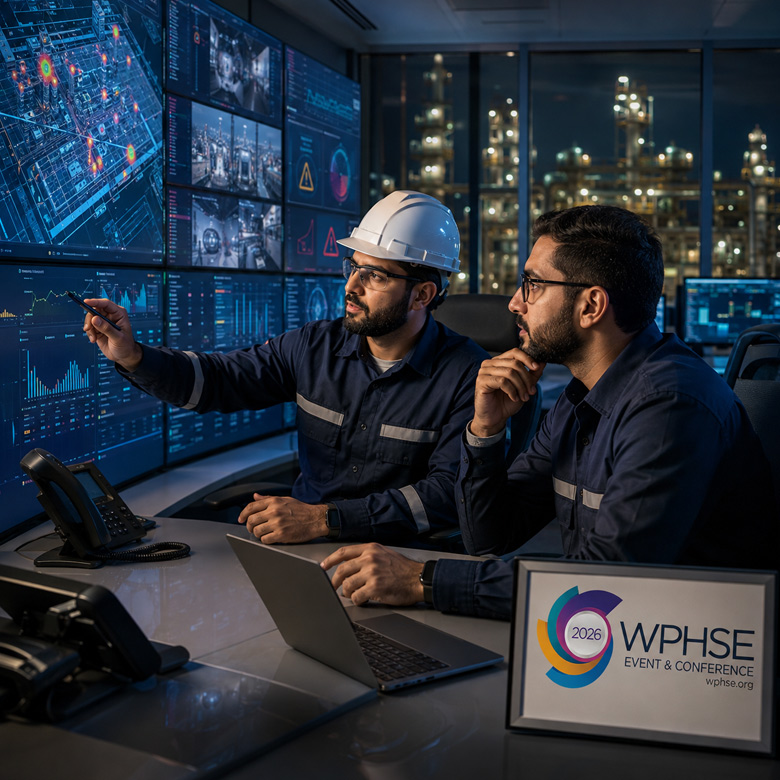
Data can also be connected to centralized dashboards that display the status of different locations, helping safety teams identify where a hazard is occurring, understand its nature, and assess how quickly it is developing rather than relying on delayed reports or infrequent measurements.
Wearable Technologies and Worker Protection
Wearable devices offer significant opportunities to monitor workers’ exposure to hazards while performing their duties. Sensors can be integrated into helmets, vests, or professional smartwatches to measure factors such as heat stress, falls, gas exposure, or entry into hazardous zones.
Some systems can send direct alerts to workers and supervisors when a defined threshold is exceeded or request assistance when a fall or abnormal lack of movement is detected.
These solutions require a balanced approach that protects workers without turning them into a constant source of personal data. Only information necessary for safety should be collected, and organizations should clearly explain its purpose, who can access it, and how long it will be retained.
Drones and Robotics
Drones and robots can support inspection activities in locations that are difficult to access or involve elevated levels of risk, such as tanks, pipelines, high structures, and areas affected by heat or hazardous chemicals.
Drones can capture detailed images and data from structures and equipment, while robots can enter confined spaces or inspect areas that might expose workers to falls, suffocation, contamination, or other hazards.
These technologies do not completely replace human inspection, but they can reduce the amount of time workers are exposed to dangerous conditions and provide valuable preliminary information that helps specialists plan safer interventions.
Digital Twins and Hazard Scenario Simulation
A digital twin provides a virtual model connected to the data of an actual facility or piece of equipment. It can be used to monitor performance, simulate the effects of operational changes, and test multiple scenarios without exposing workers or the physical site to risk.
For example, an organization may use the model to assess the impact of increased pressure, system failure, or changes to traffic and movement routes, then evaluate the results and develop appropriate procedures before implementing any physical change.
Digital simulation can also help improve evacuation and emergency response plans, optimize equipment placement, identify assembly points, and plan access routes to hazardous areas.
Supporting Inspections and Hazard Reporting
Smart platforms can simplify the reporting of safety observations through smartphones or tablets by allowing users to add photos, location data, time, and hazard type. The system can then classify reports, route them to the responsible team, and track corrective actions.
Natural language processing technologies can also analyze descriptions and group similar reports together, helping organizations identify recurring issues that may appear unrelated when reviewed individually.
This type of automation reduces the time spent on paperwork, but it does not eliminate the need for professional review to verify classification accuracy and ensure that the corrective action taken is appropriate.
Challenges of Using Artificial Intelligence
The value of smart technologies does not depend solely on purchasing equipment or software. The accuracy of the results depends on data quality, system configuration, and how well the technology is adapted to the nature of the organization.
Incomplete or inaccurate data may result in false alerts or cause certain risks to be overlooked. Similarly, an excessive number of irrelevant notifications may reduce users’ confidence in the system and lead to alert fatigue.
Other challenges include data protection, cybersecurity, system integration, user training, and defining responsibility for decisions. Artificial intelligence should therefore be treated as a decision-support tool, with human review remaining essential throughout every stage.
Steps for Implementation Within Organizations
Organizations can begin gradually and systematically by following these steps:
- Identify a clear problem that technology can help address.
- Select a specific site or process for an initial pilot project.
- Review the quality of available data before developing the system.
- Involve safety, operations, and information technology teams from the beginning.
- Establish a clear process for responding to alerts.
- Train employees to use the technology and understand its limitations.
- Develop policies for privacy protection and cybersecurity.
- Measure the solution’s impact on risk levels and response performance.
- Review results and continuously update the system.
- Expand gradually after confirming the effectiveness of the pilot.
People at the Heart of Smart Safety
Despite rapid technological development, human expertise remains essential for understanding workplace context, evaluating conditions, and making appropriate decisions. A system may identify a pattern or generate an alert, but it may not always fully understand the nature of the task or the surrounding circumstances.
The best results are achieved when artificial intelligence complements workers’ experience, observations, and professional knowledge. Technology provides data and analysis, while people interpret that information and determine the most appropriate course of action.
Toward a Safer and More Informed Future
Artificial intelligence and smart technologies create significant opportunities to improve occupational risk prevention through early detection, enhanced visibility, reduced direct exposure to hazards, and stronger decision-making support.
However, success should not be measured by the number of devices or systems in use. It should be measured by their ability to protect workers, improve safety behavior, and strengthen response capabilities. When technology is implemented within a framework that combines clear policies, effective training, strong leadership, and human expertise, it can become a powerful tool for building safer and more sustainable workplaces.